
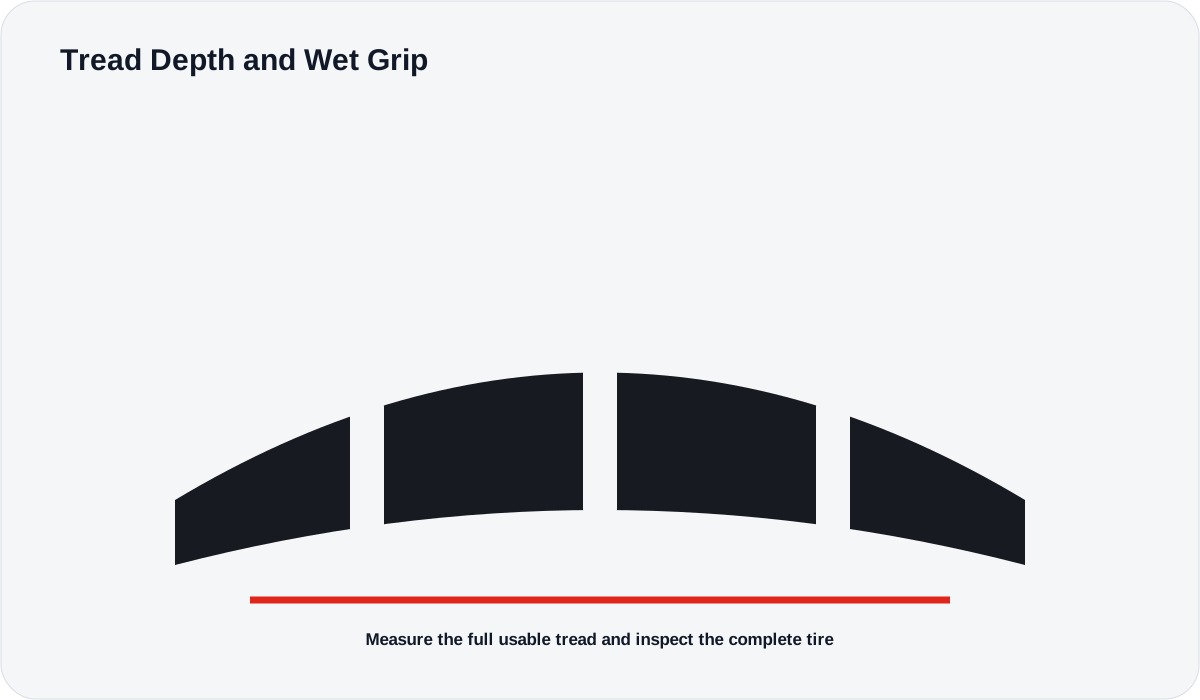
Tread grooves provide volume and pathways for water to leave the contact patch; shallower grooves generally provide less reserve in standing water.
Tread grooves provide volume and pathways for water to leave the contact patch; shallower grooves generally provide less reserve in standing water.
Wet performance changes progressively and depends on tire design, pressure, speed, water depth, road texture and temperature. A compliance threshold is not a complete description of wet-road capability.
Avoid universal stopping-distance promises. Test results vary by vehicle, tire model, road and method. Explain the measured condition and the direction of risk.
Base the recommendation on actual measurements, expected use, season and manufacturer guidance. Show the customer the minimum reading rather than only a colour status.
What the finding means
Wet performance changes progressively and depends on tire design, pressure, speed, water depth, road texture and temperature. A compliance threshold is not a complete description of wet-road capability.
Avoid universal stopping-distance promises. Test results vary by vehicle, tire model, road and method. Explain the measured condition and the direction of risk.
Possible contributors
A visible pattern or measured condition is evidence, not proof of one component failure. Compare all tire positions and combine the tire findings with pressure, alignment, wheel-end and service-history data.
| Condition to consider | Role | Verification |
|---|---|---|
| Low minimum groove depth | Possible contributor | Verify with measurements and vehicle history |
| Large inner-to-outer depth difference | Possible contributor | Verify with measurements and vehicle history |
| Low inflation pressure | Possible contributor | Verify with measurements and vehicle history |
| Mismatched tires or depths across an axle | Possible contributor | Verify with measurements and vehicle history |
| High-speed operation in standing water | Possible contributor | Verify with measurements and vehicle history |
Workshop inspection procedure
- Measure the minimum groove on every tire
- Compare axle pairs and tire type
- Record cold pressure
- Inspect uneven wear that reduces one part of the footprint first
- Discuss climate, duty and replacement timing
Pressure, tire position, measurements, photographs and vehicle condition should be recorded before correction. That evidence makes the recommendation understandable and supports future comparison.
Service decision and follow-up
Base the recommendation on actual measurements, expected use, season and manufacturer guidance. Show the customer the minimum reading rather than only a colour status.
Inspect the opposite tire and the other axle before finalizing the recommendation. When corrective work is performed, set a verification point so the workshop can confirm that new wear is no longer progressing abnormally.
Tread depth does not override a bulge, exposed reinforcement, suspected separation, severe run-flat history or damage outside an approved repair procedure.
Frequently asked questions
Why does wet grip change as tread wears?
Reduced groove volume generally lowers the tire’s ability to evacuate water, especially at higher speed or greater water depth.
Is tread depth the only wet-grip factor?
No. Tire compound, design, pressure, temperature, load, speed and road surface also matter.
Should measurements be taken across the full width?
Yes. The lowest representative groove and the variation across the tread are both important.
Does a legal measurement mean the tire performs like new?
No. Legal compliance and new-tire wet performance are different questions.
Technical review edition · Published 17 July 2026.