
Wheel balancing measures and corrects unequal mass distribution in a tire-and-wheel assembly so rotating forces remain within an acceptable range.
Static and couple imbalance are different conditions.
Mounting error can create a false reading.
Balance does not correct tire or wheel runout.
A verification spin is part of every complete balance.
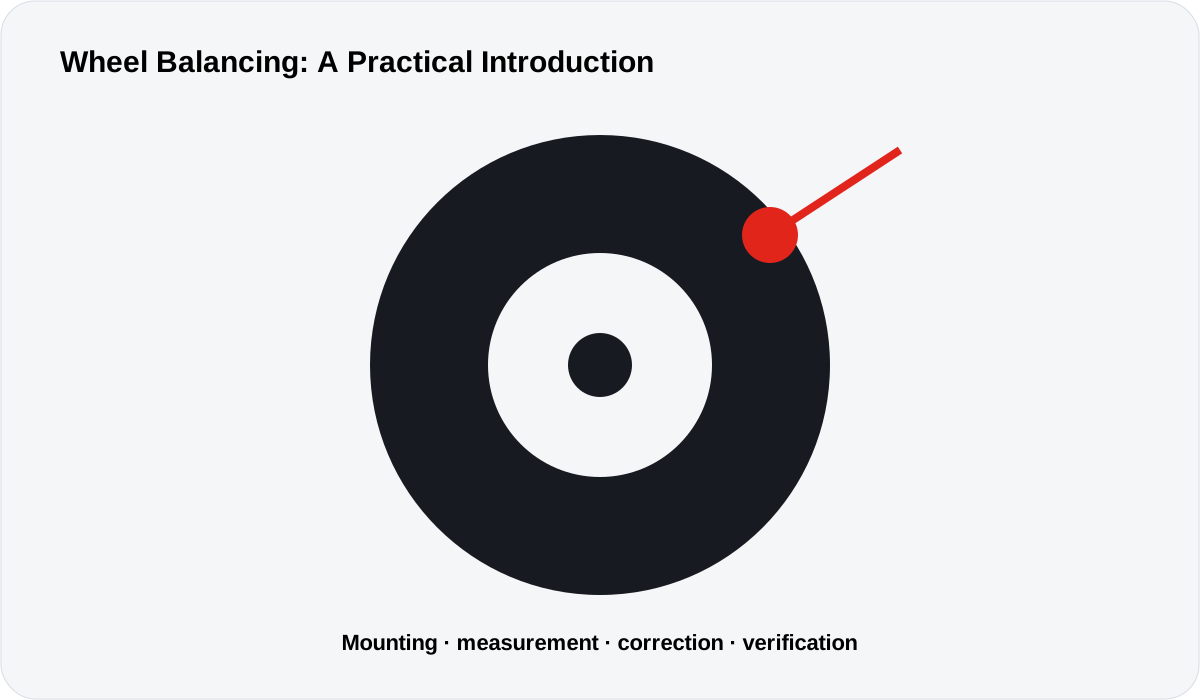
Why imbalance creates vibration
A heavy area produces a repeating centrifugal force as the assembly rotates. The force increases rapidly with speed, which is why a small imbalance may be unnoticed in town but obvious on the highway. Where the vibration is felt depends on axle position, suspension response and vehicle structure.
How the machine calculates correction
The balancer senses forces during rotation and combines them with wheel dimensions and angular position. It resolves the correction into one or more planes. Incorrect distance, diameter, width or mode selection changes the calculated weight placement.
Balance as part of diagnosis
A balanced assembly can still vibrate because of radial runout, lateral runout, tire force variation, hub corrosion or vehicle looseness. Treat balancing as one controlled measurement in a wider vibration diagnosis.
Diagnostic reference
| Finding | Possible meaning | Next check |
|---|---|---|
| Reading changes after remount | Centering or adapter problem | Clean and repeat mount |
| Large weight demand | Runout, wrong dimensions or tire issue | Verify geometry first |
| Zero on machine, vibration on vehicle | Hub mounting or force variation | Measure installed runout |
Workshop procedure
- Inspect tire and wheel.
- Remove old weights for a fresh diagnosis.
- Clean shaft and adapters.
- Mount with the correct centering method.
- Enter dimensions and select the correct mode.
- Apply weight and complete a verification spin.
Frequently asked questions
Can a new tire need balancing?
Yes. New tires and wheels still have manufacturing variation.
Does balancing fix a bent wheel?
No. It corrects mass, not shape.
Why does vibration occur only at certain speeds?
Rotating forces can excite vehicle resonances in specific speed ranges.
Technical review edition · Published 17 July 2026.