
A hub-centric wheel locates primarily through its center bore; a lug-centric wheel depends more heavily on the fastener pattern and seat geometry.
Reproduce the vehicle centering method whenever possible.
A cone is not ideal for every wheel.
Flange plates improve bolt-pattern centering.
Hub corrosion can create installed runout.
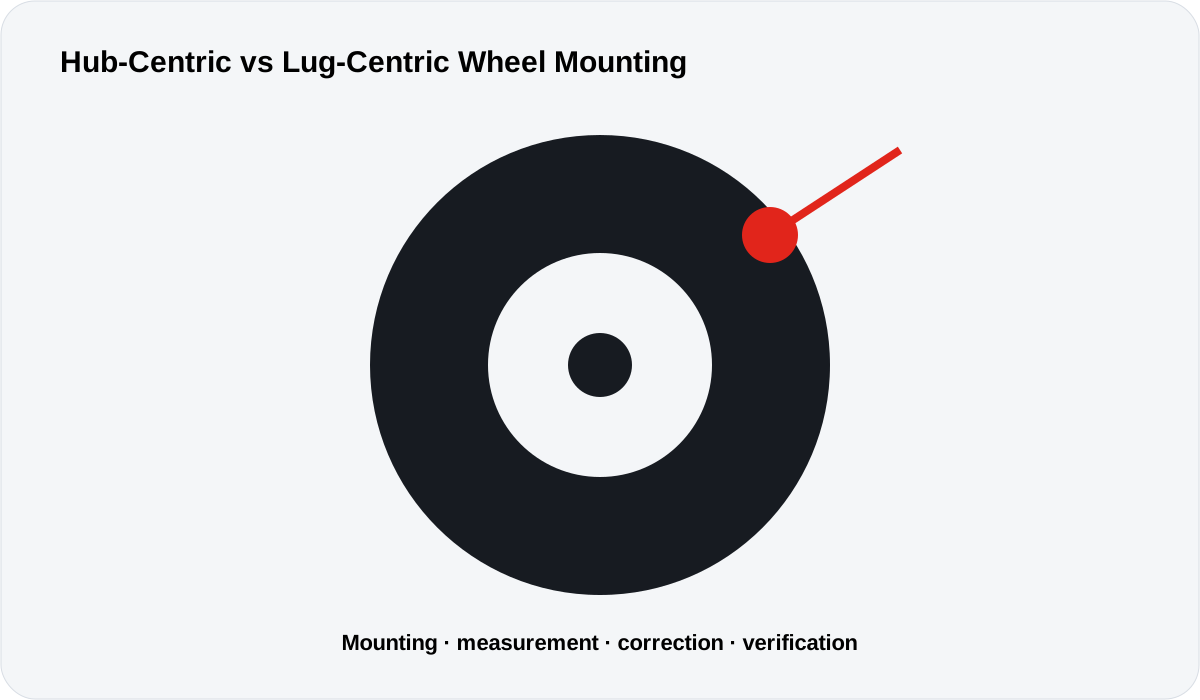
Vehicle centering design
Hub-centric wheels use the center pilot to define the axis. Lug-centric designs rely more on fastener seats. Some wheels use both features.
Balancer adapters
Rear cones suit many hub-centric wheels. Collets and flange plates improve support for large bores, damaged pilots and lug-centric designs.
Vehicle installation
Clean the hub face and pilot, tighten in sequence and torque correctly. A well-balanced wheel can still run eccentrically on a contaminated hub.
Diagnostic reference
| Finding | Possible meaning | Next check |
|---|---|---|
| Reading changes after remount | Balancer centering issue | Use alternate adapter |
| Balanced wheel vibrates installed | Hub seating issue | Clean and measure runout |
| Large center bore | Poor cone contact | Use collet or plate |
Workshop procedure
- Identify wheel-centering design.
- Inspect bore and fastener seats.
- Select cone, collet or flange plate.
- Perform a remount repeatability test.
- Clean vehicle hub before installation.
Frequently asked questions
Why use a flange plate?
It reproduces bolt-pattern centering on wheels where the center bore is not the primary reference.
Can corrosion cause vibration?
Yes. Debris can create installed runout.
Does tightening sequence matter?
Yes. Uneven tightening can shift wheel seating.
Technical review edition · Published 17 July 2026.